Grief Is Not Linear, and Neither Is Memory

Why remembering someone comes in waves, glitches, and unexpected moments.
We often imagine grief as a straight path, something we walk from shock to acceptance without looking back. But anyone who has lost a loved one knows it rarely works that way. Memories surge like ocean tides, pulling us under one moment and receding the next, while grief itself loops, skips, and surprises us in quiet corners of daily life. This unpredictable rhythm is not a flaw in our healing, it is how our minds and hearts process profound loss. Let us explore why grief defies timelines, how memories glitch and resurface, and what we can do to navigate these waves with grace.

The Myth of Linear Stages
Many of us grew up hearing about the five stages of grief, denial, anger, bargaining, depression, and acceptance. Yet, these were never meant to be a rigid sequence. They describe common emotions, but in reality, they arrive out of order, repeat, or overlap. One day you might feel a flicker of peace, only to wake the next engulfed in anger. This nonlinear path reflects how our brains adapt to loss, not a failure to "move on."
Why Waves?
The Brain's Way of Protecting Us Grief comes in waves because our minds cannot handle constant intensity. Like a circuit breaker preventing overload, the brain doles out pain in manageable bursts. In calm periods, we rebuild strength, then a trigger, a song, a scent, or a familiar street, unleashes a fresh swell. This ebb and flow allows us to function while slowly integrating the loss into our lives. It is a survival mechanism, shaped by the unique bond we shared with the person or pet we mourn.
Memory Glitches: Forgetting, Then Flooding Back
Sometimes, memories seem to glitch, vanishing when we reach for them, only to return unbidden in vivid detail. This happens because grief ties into how our brains store and retrieve information. Under stress, recall can falter, creating foggy blanks. But as time passes, neural pathways reconnect, often sparked by sensory cues. A glitch might feel disorienting, like losing the person again, but it is part of rewiring our inner world around their absence.
Unexpected Moments: Triggers Hiding in Plain Sight
The most startling aspect of nonlinear grief is how it ambushes us in ordinary moments. Folding laundry might unearth a forgotten shirt, evoking a rush of laughter and tears. Holidays, anniversaries, or even weather changes can act as portals to the past. These surprises remind us that memory is not static, it is alive, woven into our senses and routines. Rather than fighting them, acknowledging these moments can turn them into gentle bridges to the love that remains.
New Horizons in Honoring Nonlinear Memory
Digital Memorials as Anchors
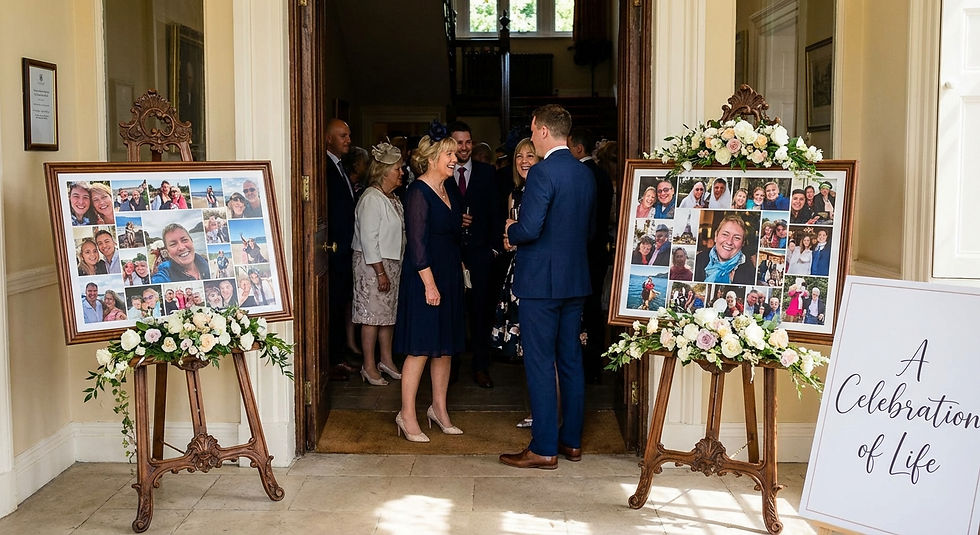
In a world where grief ebbs and flows, online memorials offer a steady space to revisit memories on our own terms. Platforms like A Life Portrait let families build living tributes with photos, stories, and voice notes, accessible anytime a wave hits. For pets or living portraits, these spaces preserve joys before loss strikes, turning glitches into cherished collections.
Therapeutic Tools for the Waves
Journaling prompts focused on triggers, or apps that track emotional patterns, help map our personal grief landscapes. Therapy approaches like EMDR can smooth memory glitches, while mindfulness practices teach us to ride the waves without drowning.
Gentle Takeaways
Embrace the chaos. Nonlinear grief is normal, a sign your heart is still connected. Triggers are teachers. Each unexpected memory reveals layers of love worth honoring. Create anchors. Build memorials that hold space for waves, whether through stories, photos, or shared rituals.
Patience heals. Everyone's timeline differs, so grant yourself grace in the glitches.
If you are navigating these waves, consider crafting an online memorial at www.alifeportrait.com. It is a way to gather scattered memories into a portrait that evolves with you, keeping love close no matter how grief twists and turns.


Comments